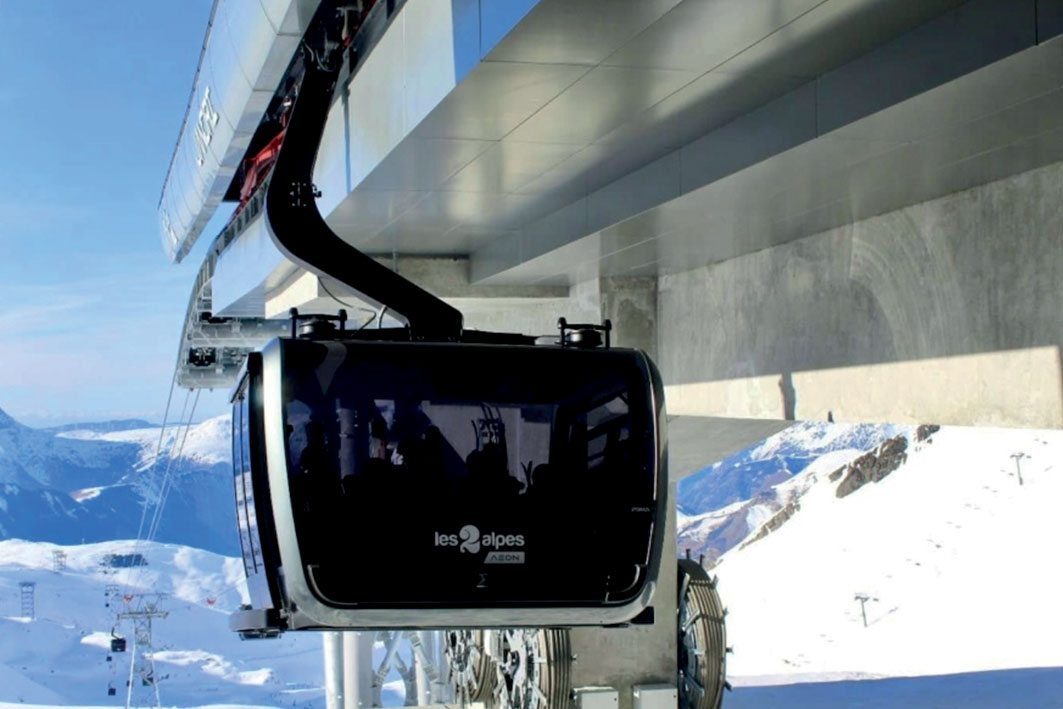
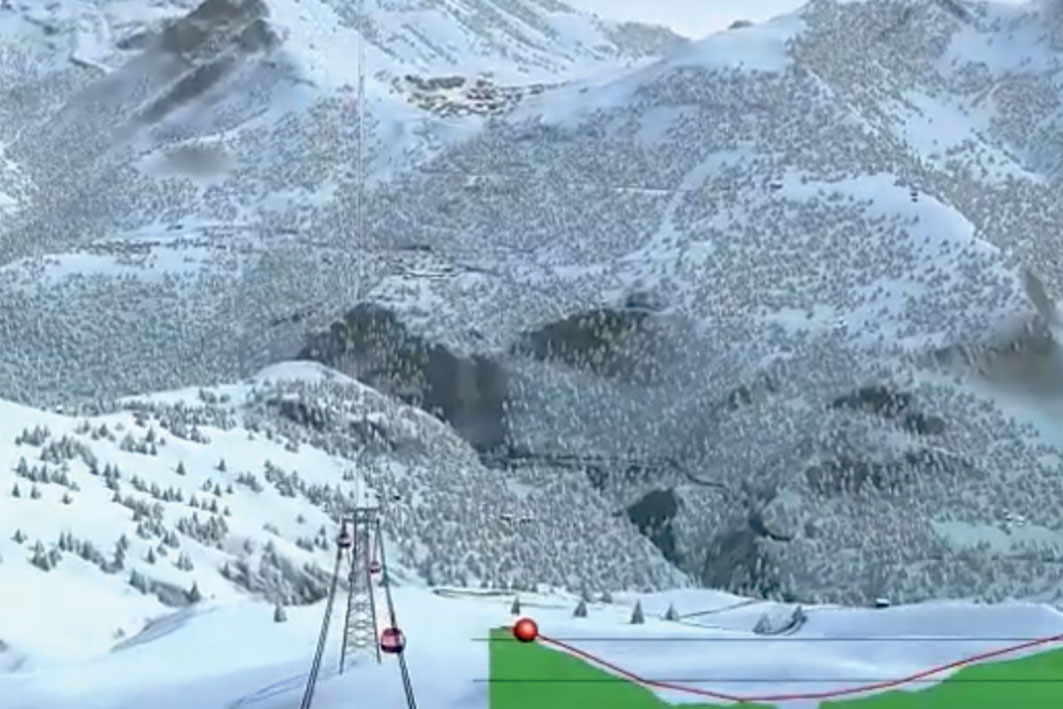
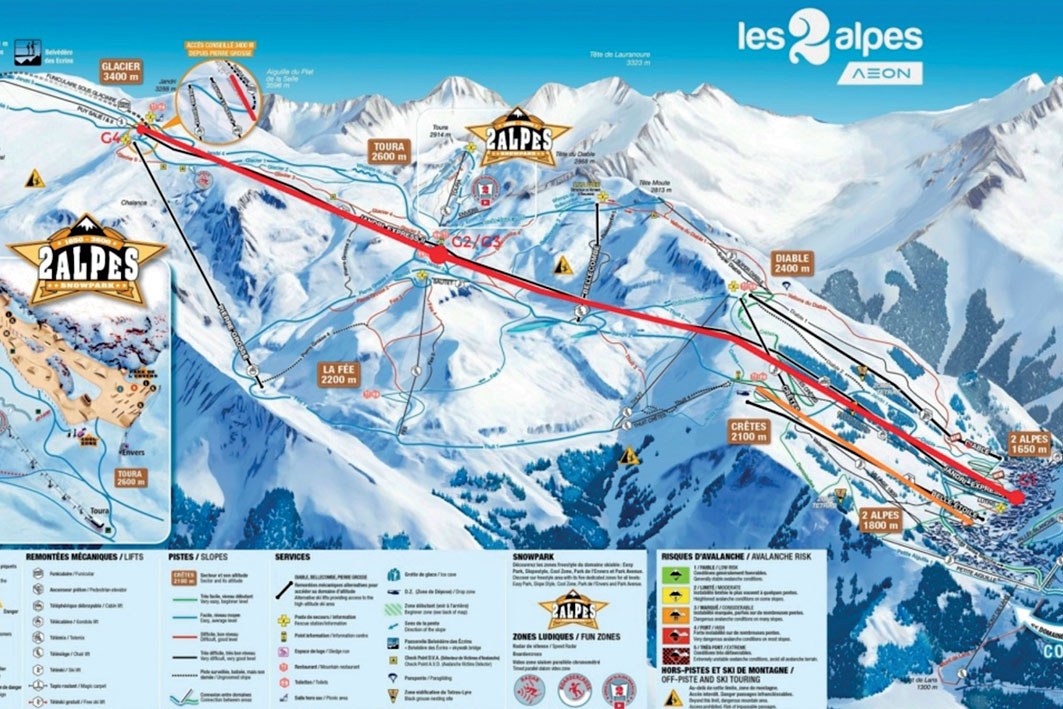
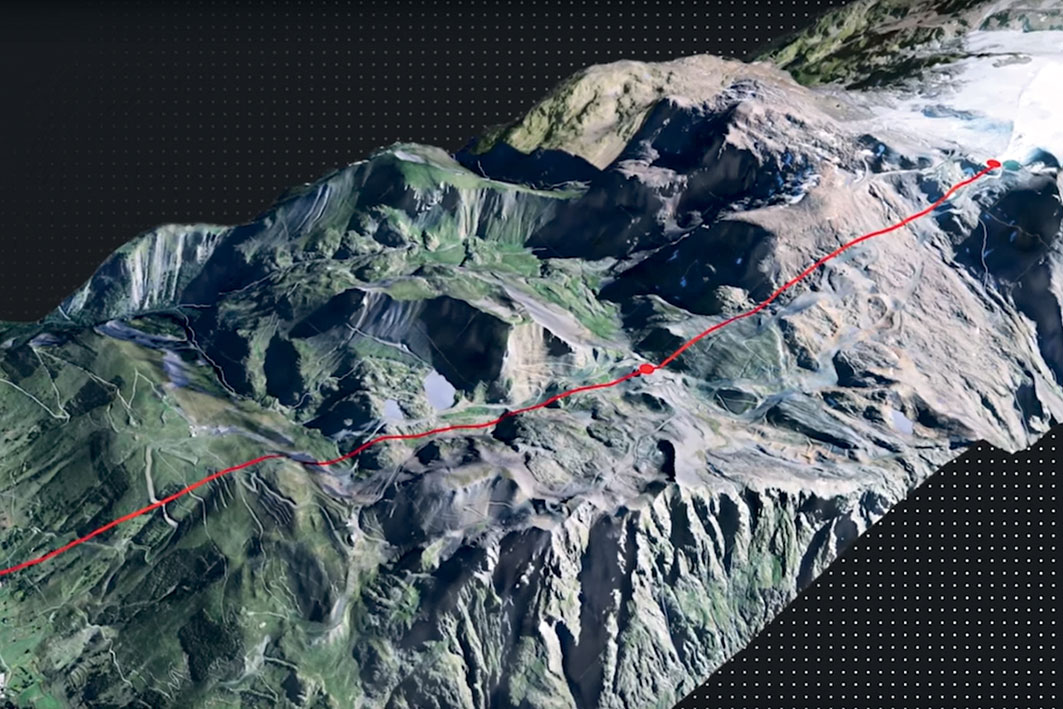
On December 7, 2024, the 3S Poma (as part of the operational synergies of the HTI group) began full operation on two “Jandri” platforms in Les Deux Alpes (with the second section having been operational since November 30). This colossal system allows access from Les Deux Alpes to the Mont-de-Lans glacier, with a capacity of 3,000 passengers/hour (provisional 2,800 passengers/hour) over a 1,478 m difference in altitude, a length of 6,433 m, and only 7 supports (compared to the previous 17), a speed of 8.0 m/sec, and 52 cabins each holding 32 passengers. In summer, the journey takes just 17 minutes, compared to the previous 40. In winter, the two sections operate separately (at the intermediate station you have to get off and get back in line for the next section, due to the difficult and well-known problems associated with intermediate stations with heavy use of recirculation on the second section).
SATA Group – Les 2Alpes also made a record investment of €148 million, doubling initial estimates. This investment is part of a planned €560 million investment by the SATA Group (2024 revenue of €128 million with 1,100 employees), which also operates the Alpe-d’Huez and La Grave ski resorts.
This investment appears to be causing serious problems for residents of the municipalities of Les 2 Alpes and St-Christophe-en-Oisans, who guaranteed the loan. The 3S replaces the previous DMC (built by Poma in 1985), also in two sections and on approximately the same line, which had a capacity of 1,800 p/h, a speed of 6 m/sec, 70 cabins with 20 standing places, 40.5 mm rope, 7 m track spacing, and power of 2,820 hp (860+550×2). Considered by many to be the first large DMC, the one at Chantemerle in nearby Serre Chevalier being a dress rehearsal for the DMC Jandri Express, which at the time cost 108 million French francs (approximately 12 million euros).
On that line, the DMC had more or less replaced a 1973 Poma “Oeufs Blancs or Jandri 1” four-passenger gondola lift (plastic seats), which ascended from 1,645 m at Les Deux Alpes to 2,180 m (960 passengers per hour and 4.0 m/sec). This was followed by the 1973 Ceretti & Tanfani “Jandri 2” 80-passenger cable car, which ascended from 2,180 m to 2,591 m (720 passengers per hour and 10.0 m/sec). This was followed by the 1973 Poma “Jandri 3” four-passenger gondola lift, which ascended from 591 m to 3,100 m (1,200 passengers per hour and 4.0 m/sec).
3S Jandri
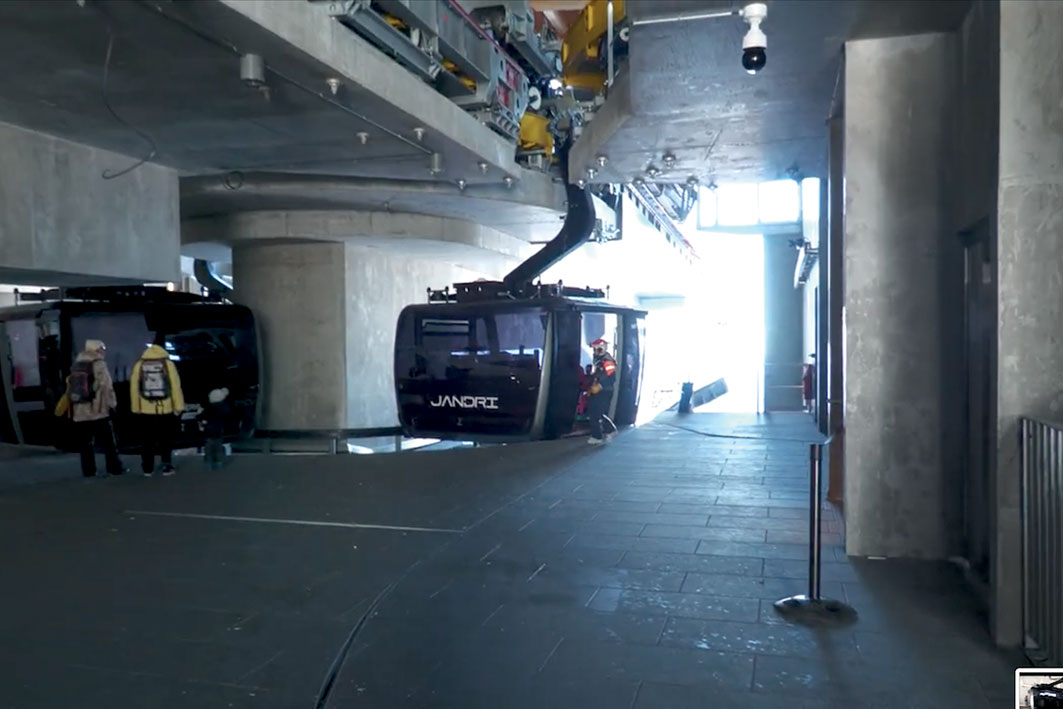
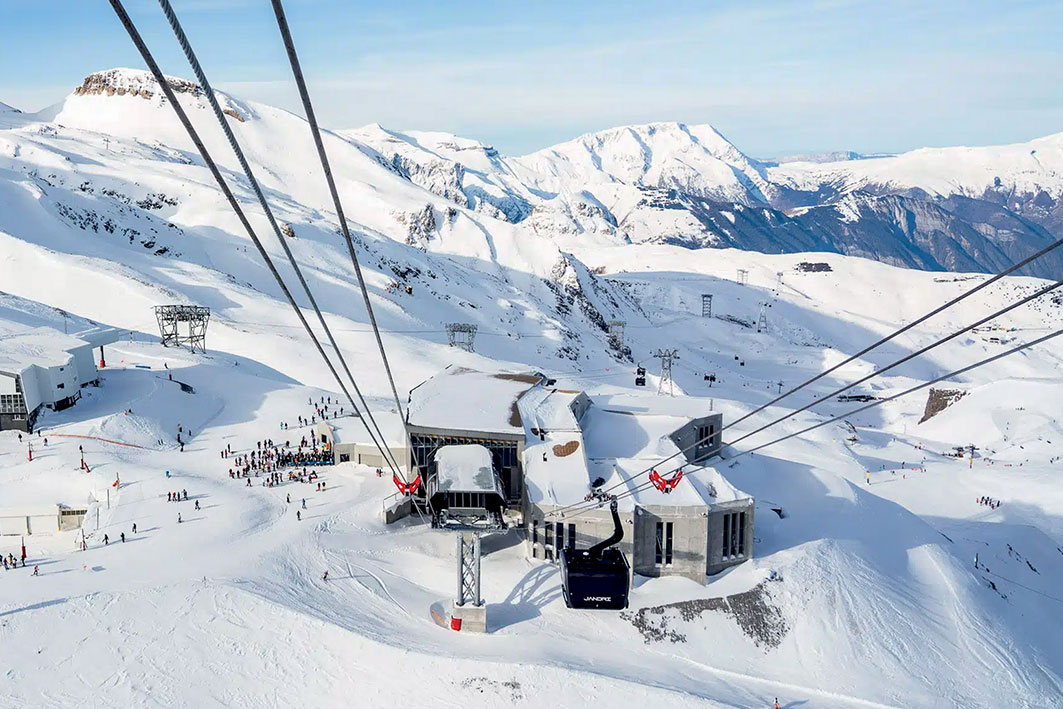
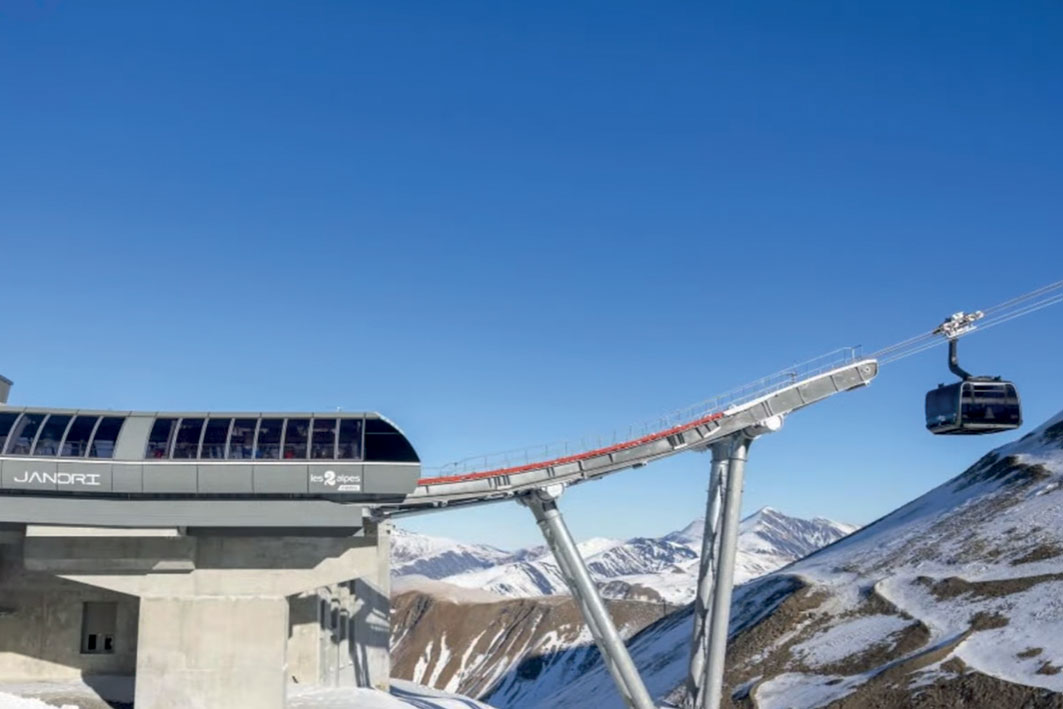
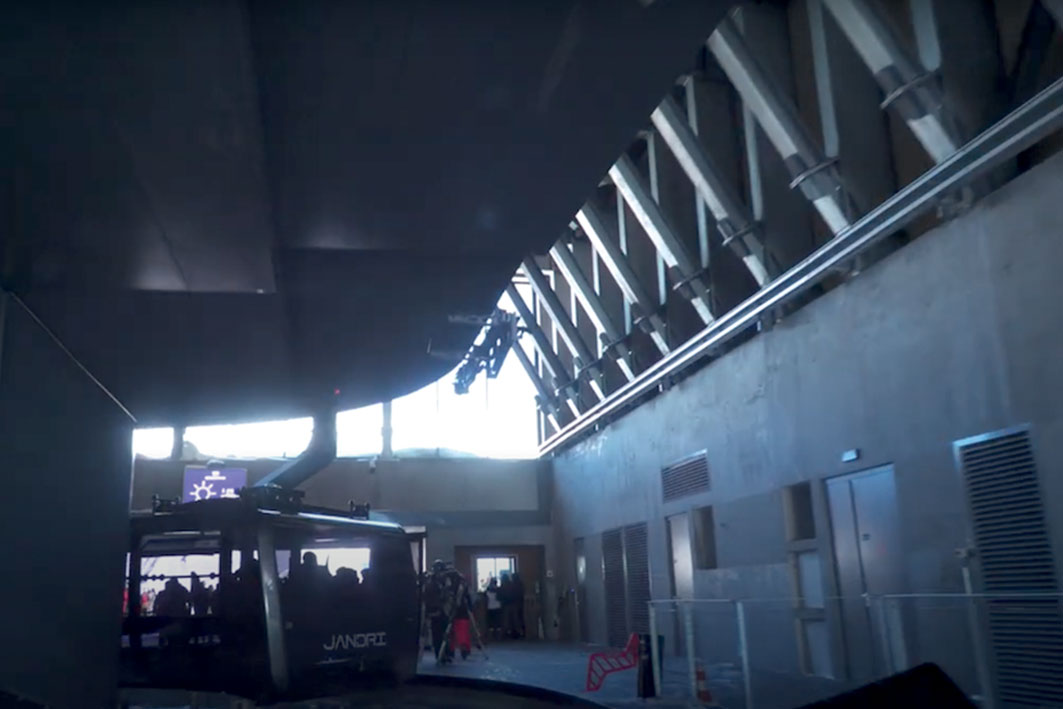
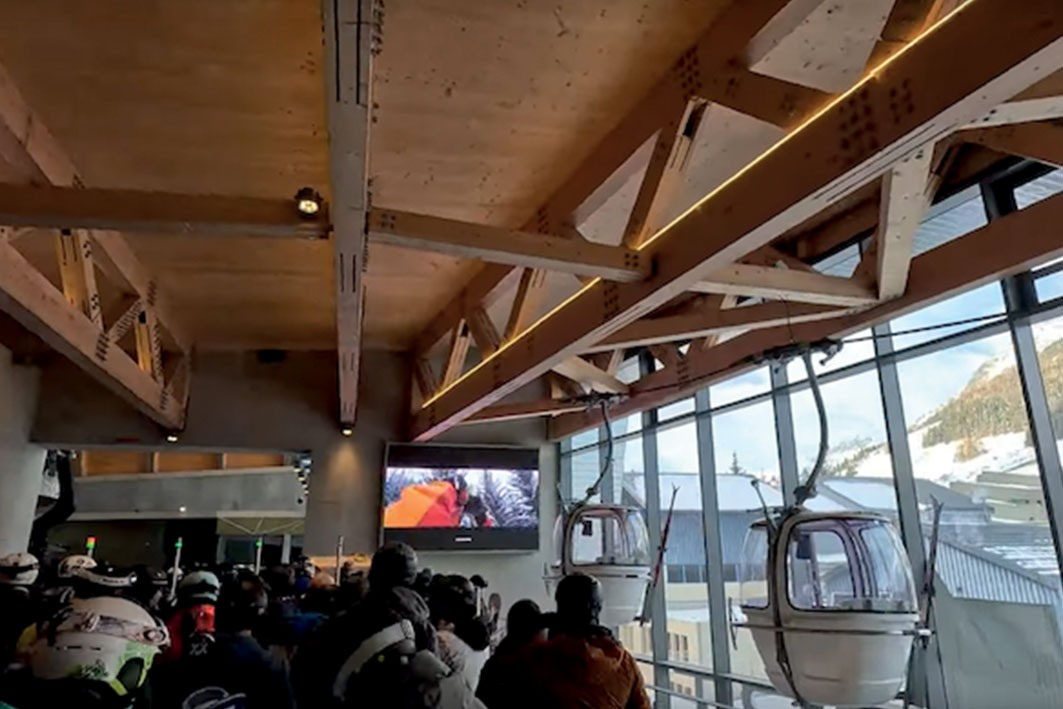
The valley station (1,662 m) is located along the Les Deux Alpes snow front, a few meters away from the DMC Jandri valley station and toward the slopes. The architectural layout is based on two elongated, side-by-side, glass-enclosed cubes facing the line: the larger one, for the cable car section, serves as a return and tension station for the first section on the upper floor, while the ground floor is dedicated to the ticket office; the smaller one is supported by a large staircase, functionally softened by three escalators (two up and one down) leading to the boarding level. The upper floor offers ample space for any queues. The slope-facing section of the smaller cube features a double parking garage. Boarding takes place in the second section of the station gyration, leaving the first section for disembarkation; all of this follows the now standard procedure for this type of facility.
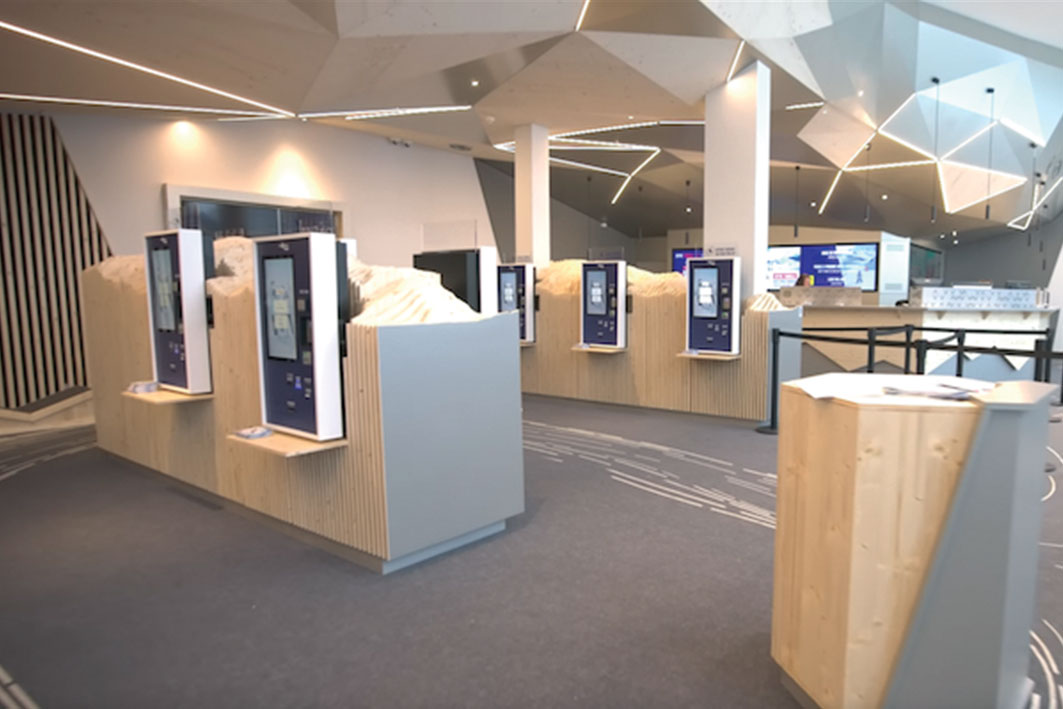
The ticket office resembles the interior of a modern McDonald’s: of the staffed checkouts, only one remains, not for sales but for information only. Sales are made via various electronic machines scattered across a large area.
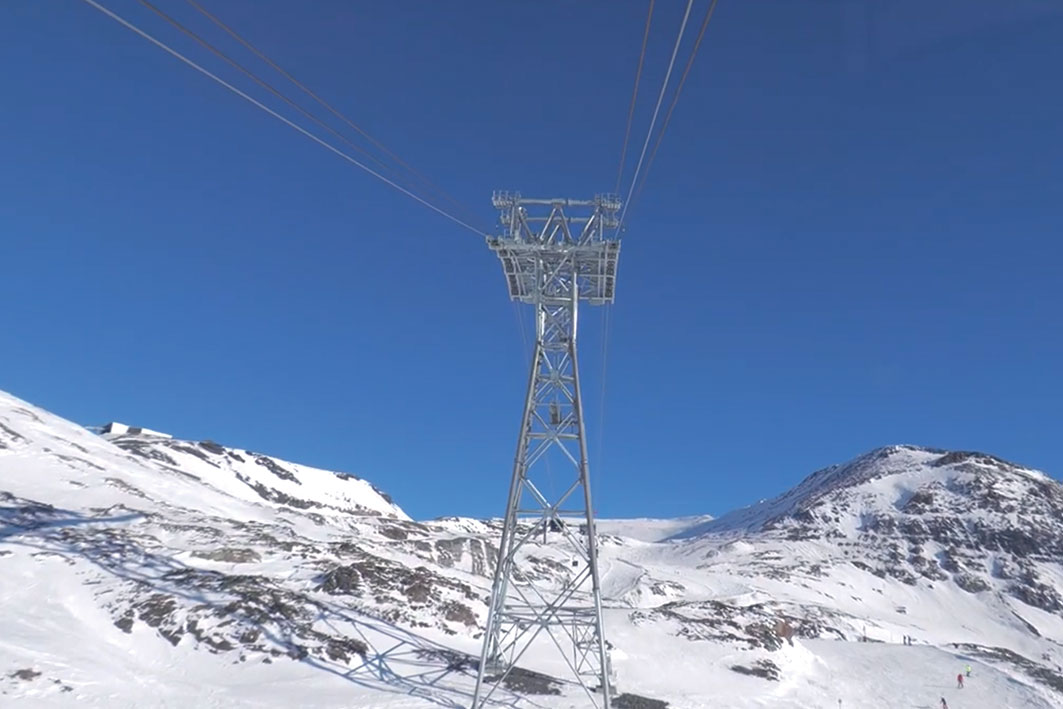
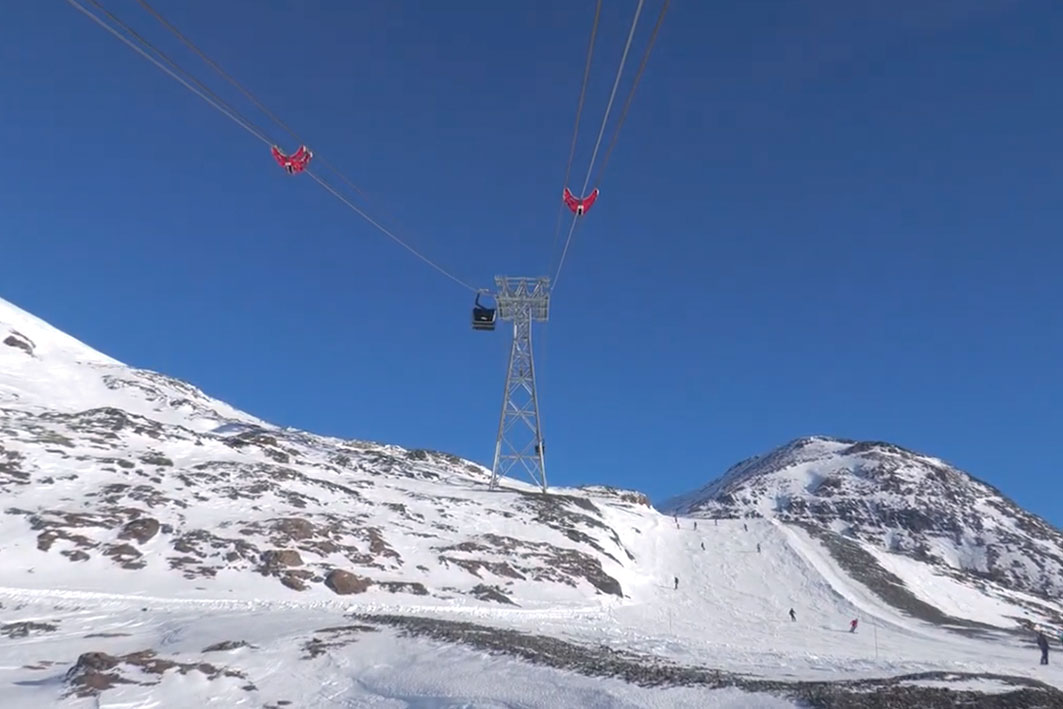
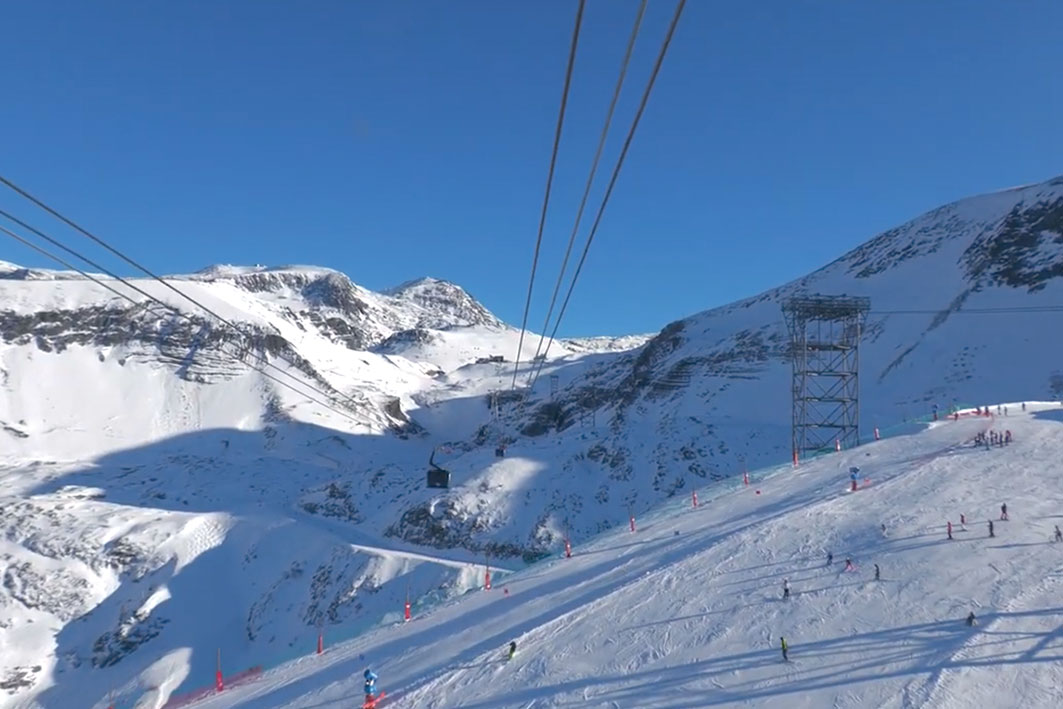
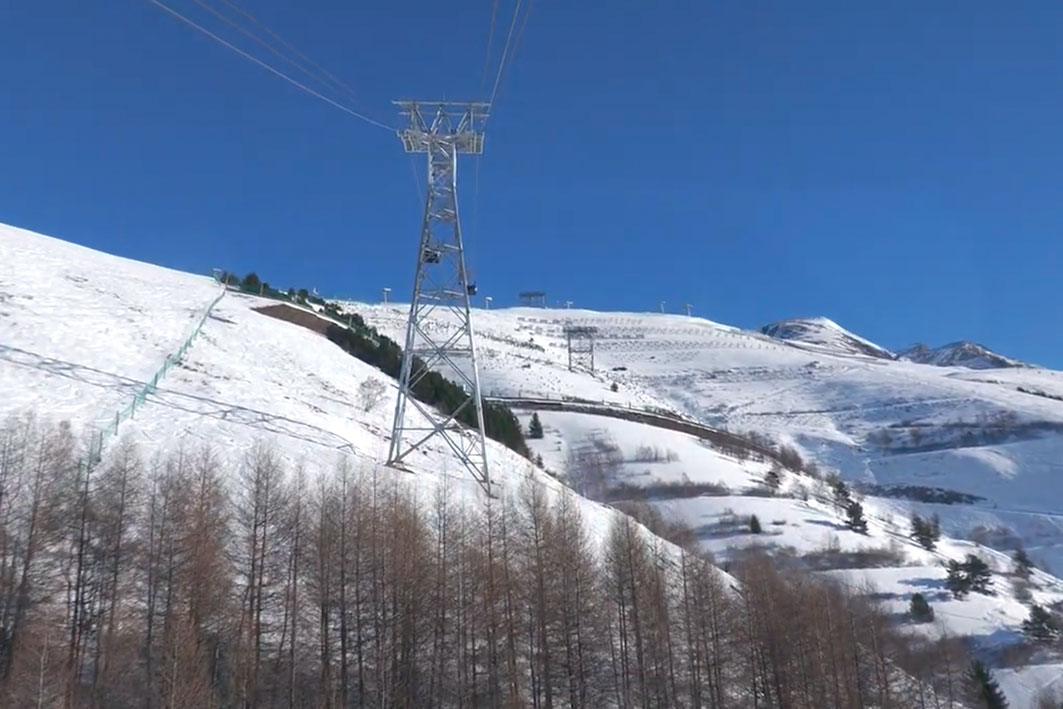
The line of the first section extends entirely through open fields beyond the treeline and on undulating terrain. This, combined with the long spans inherent in the 3S system, allowed the 3,893 m length to be constructed with just four supports. These lattice supports are much less impactful than the solution previously adopted on this DMC.
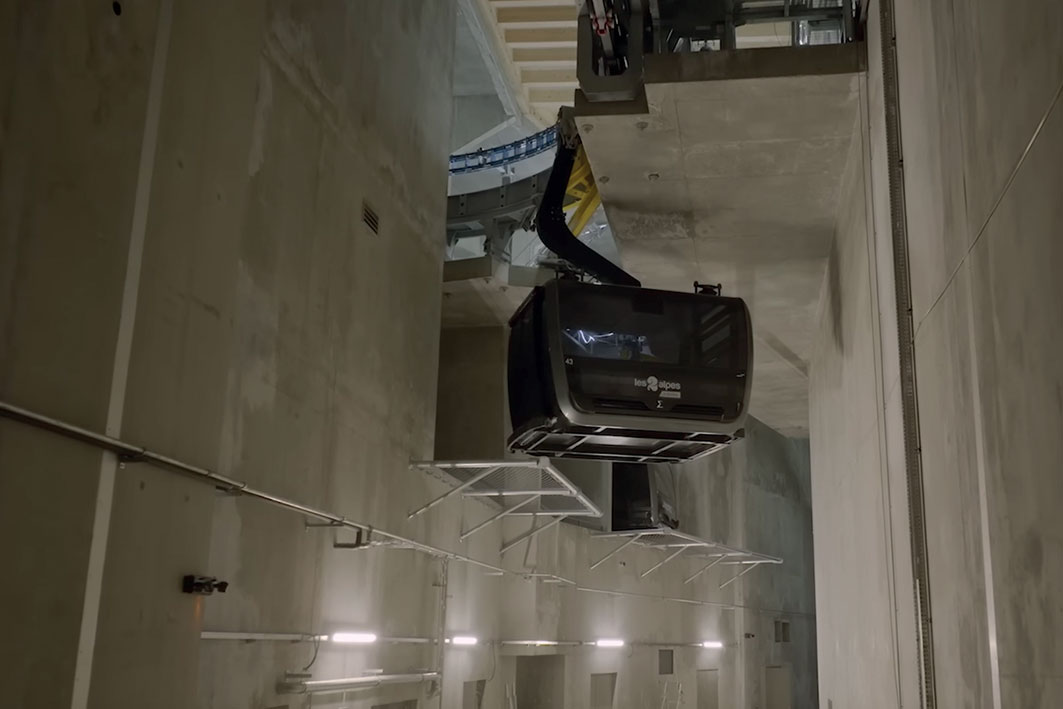
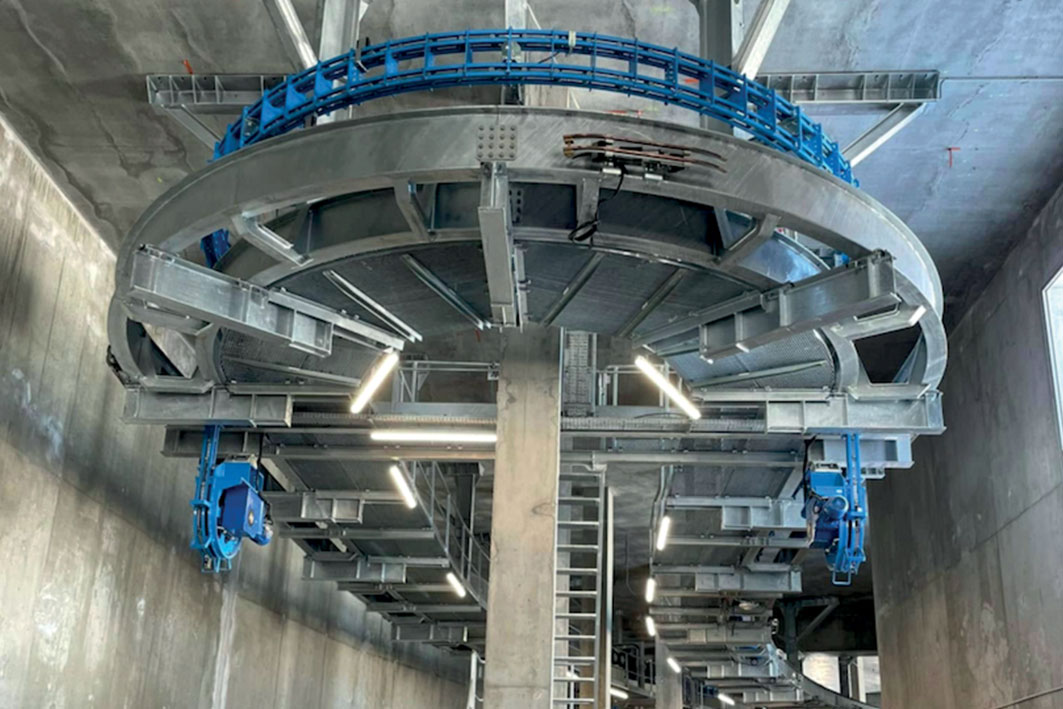
The intermediate station (2,575 m), the drive station for the first section and the tension station for the second section, is a building of considerable size, housing the warehouse for all 32 vehicles for both sections. There is also an important underground area below the slope level to accommodate a large garage for snow groomers.
The intermediate station is located at a key point on the ski slopes in the area. This also leads to significant use of recirculation on the second section of the 3S, resulting in significant problems fitting into passing cars that may already be full or partially full. This is a known problem for almost all double-section gondola lifts, but is complicated by their unusual size (up to 28 passengers).
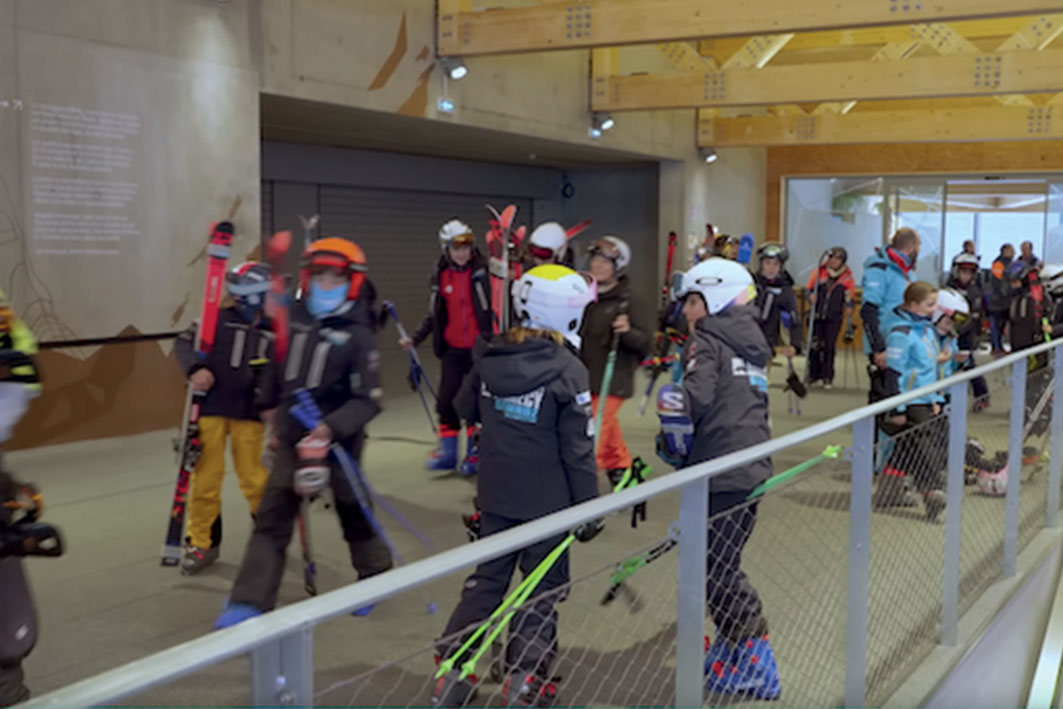
This is why, in winter, two lifts operate separately: at the end of the first section, passengers disembark and head toward the exit to bypass a wall that divides the two spaces (sections I and II) and offers a length and surface area suitable for accommodating a potentially large queue for boarding the second section.
In summer, this problem does not arise, and the two sections operate with cabins that pass from one section to the other at the intermediate station.
Not far from the new intermediate station is the DMC station, a structure slated for demolition.
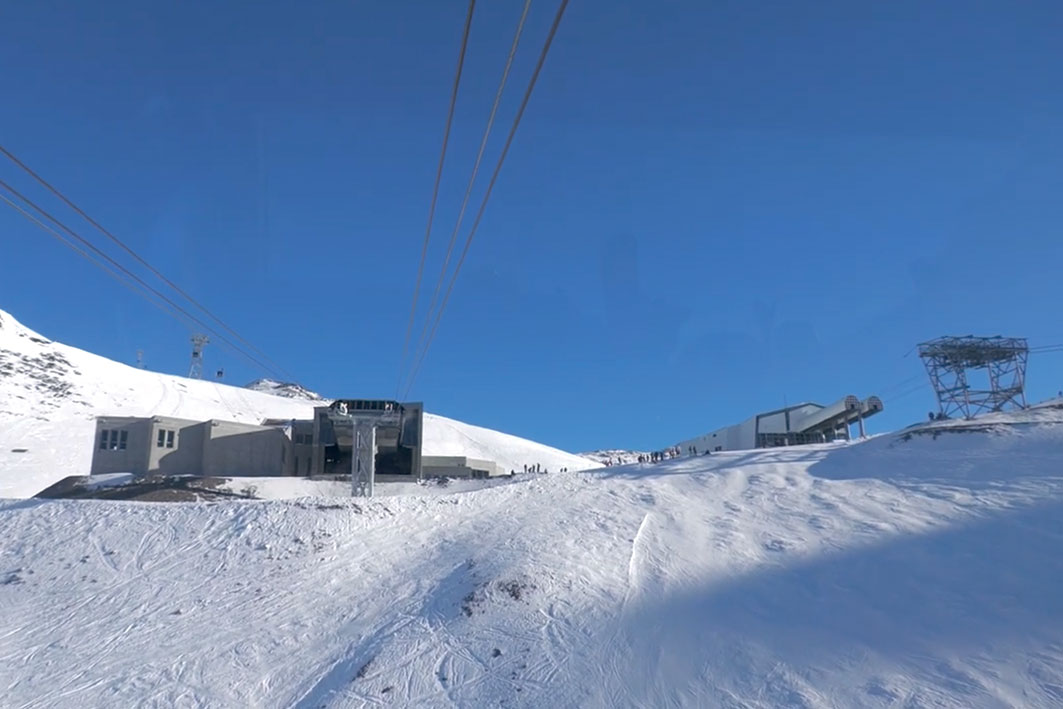
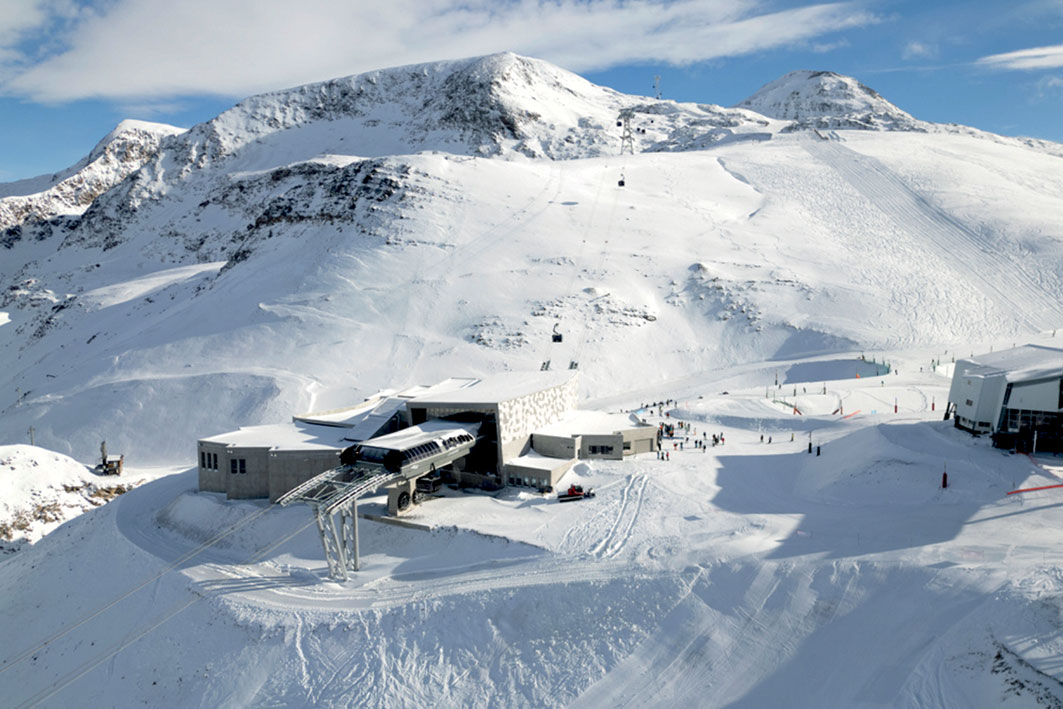
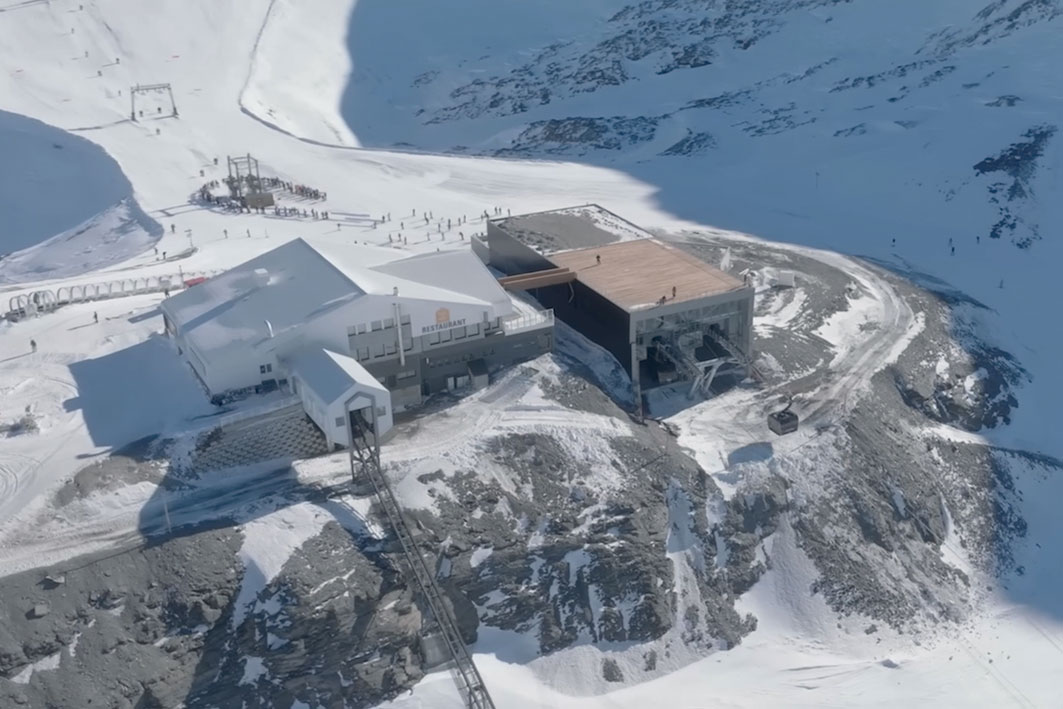
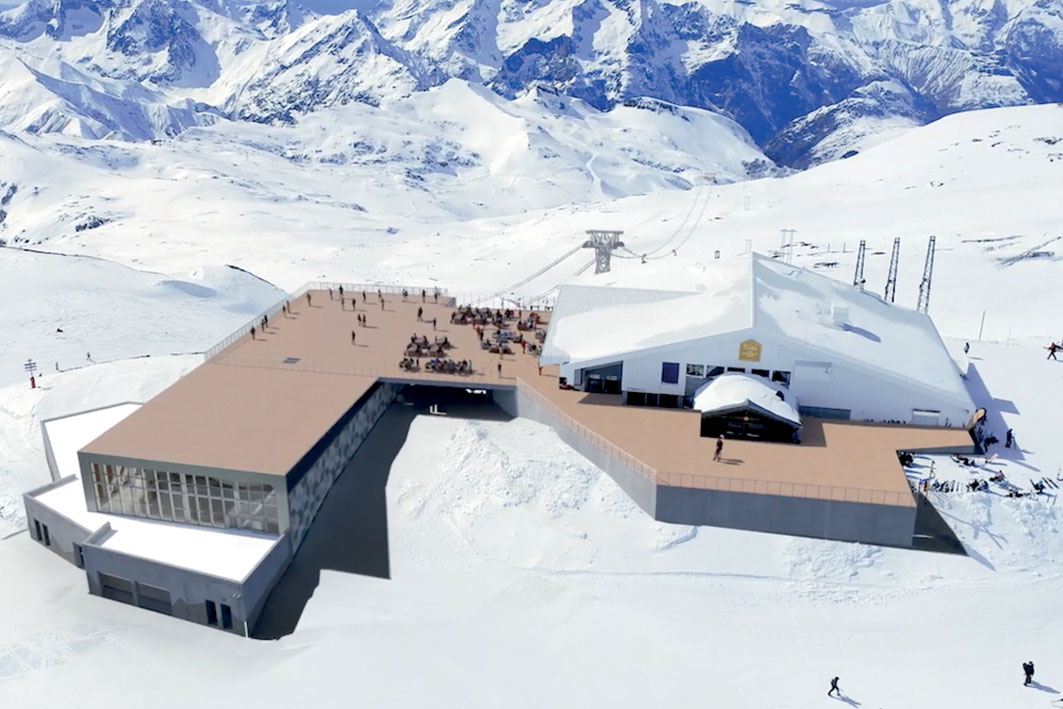
The second section of the line has similar characteristics to the first section, although with a more rugged layout. For the 2,526 m length of the second section, only three pylons were needed. The top station (3,148 m) is the drive station for the second section. Compared to the DMC top station, the 3S station is located on the opposite side and closer to the restaurant and the arrival point of the inclined elevator. Given the crossing of the cables, those of the second section and related supports had been removed at the end of the 2024 summer season. Regarding the top station, the conversion and improvement works (as per published renderings) are expected to continue in the near future with the aim of increasingly becoming a high-altitude tourist and panoramic destination, as well as a purely ski and logistics hub for summer skiing on the adjacent Mont-de-Lans glacier, which peaks at approximately 3,600 m.
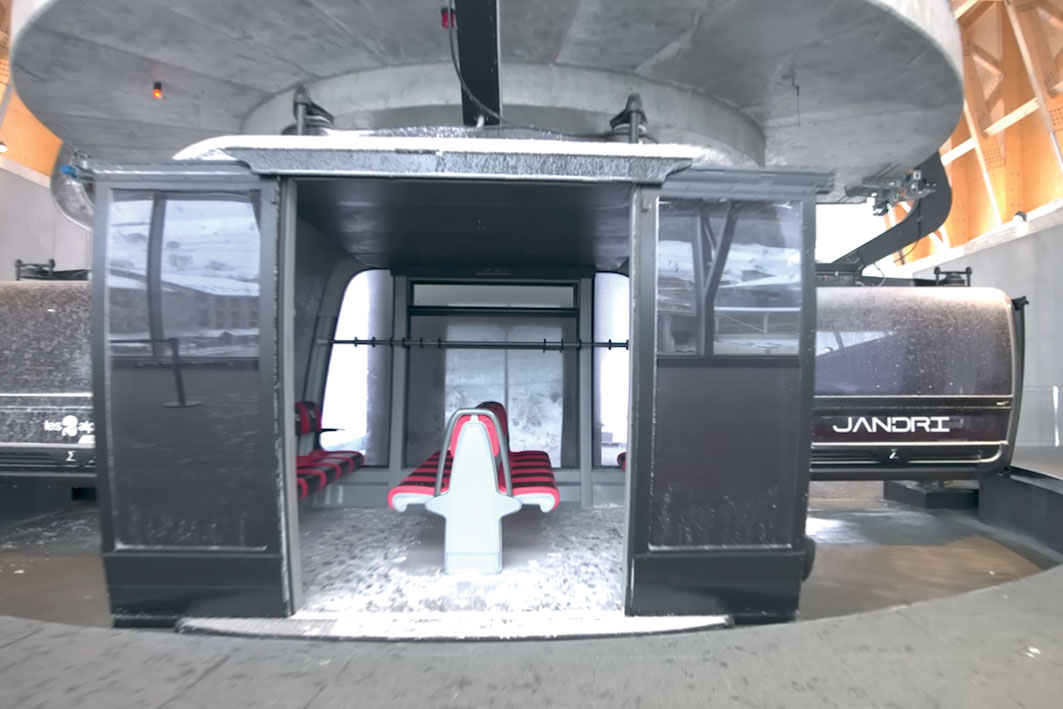
The winch is based on a double Leitner Direct Drive per log, as already used in other 3S HTI installations. No further information is available: energy savings of 5% or 15% are touted, but the amount of energy required to lift 1,800 p/h 1,500 m is avoided. The electrical system was built by Semer, part of the Poma Group, and Comag, also part of the Poma Group, worked on the installation of the supports and installation of the cables, Sacmi for the construction of the stations, and Sigma for the cabins. The 32-passenger cabins (24 seats) are of the Sigma Symphony type. They are equipped with a connected screen to allow passengers to access real-time information about the ski area. During the summer, the cabins will be equipped to accommodate mountain bikers and their equipment. The trolleys are equipped with generator rollers to power the cabins. And it doesn’t end there: another colossal 3S project has been developed to connect the Les 2Alpes and Alpe d’Huez ski areas; similarly, there is a plan for a third section of the Grave 2-cable cable car, on the other side of the Mont-de-Lans glacier. Both projects are strongly opposed by environmentalists and others, but they exist. The SATA group’s goal is a large, world-class ski area.
TECHNICAL DATA:
Section 1
Height difference: 908 m
Length: 3,891 m
Max. speed: 8.0 m/s
Capacity: 3,000 p/h
Supports: 4
Ø double load-bearing cables: 58 mm
Ø haul rope: 50.4 mm
Section II
Difference in height: 570 m
Length: 2,542 m
Max. speed: 8.0 m/s
Capacity: 3,000 p/h
Supports: 3
Ø double load-bearing cables: 58 mm
Ø haul rope: 50.5 mm
Total
Height difference: 1,478 m
Length: 6,433 m
Max. speed: 8.0 m/s
Capacity: 3,000 p/h
Number of 10-passenger cabins: 52
Supports: 7